
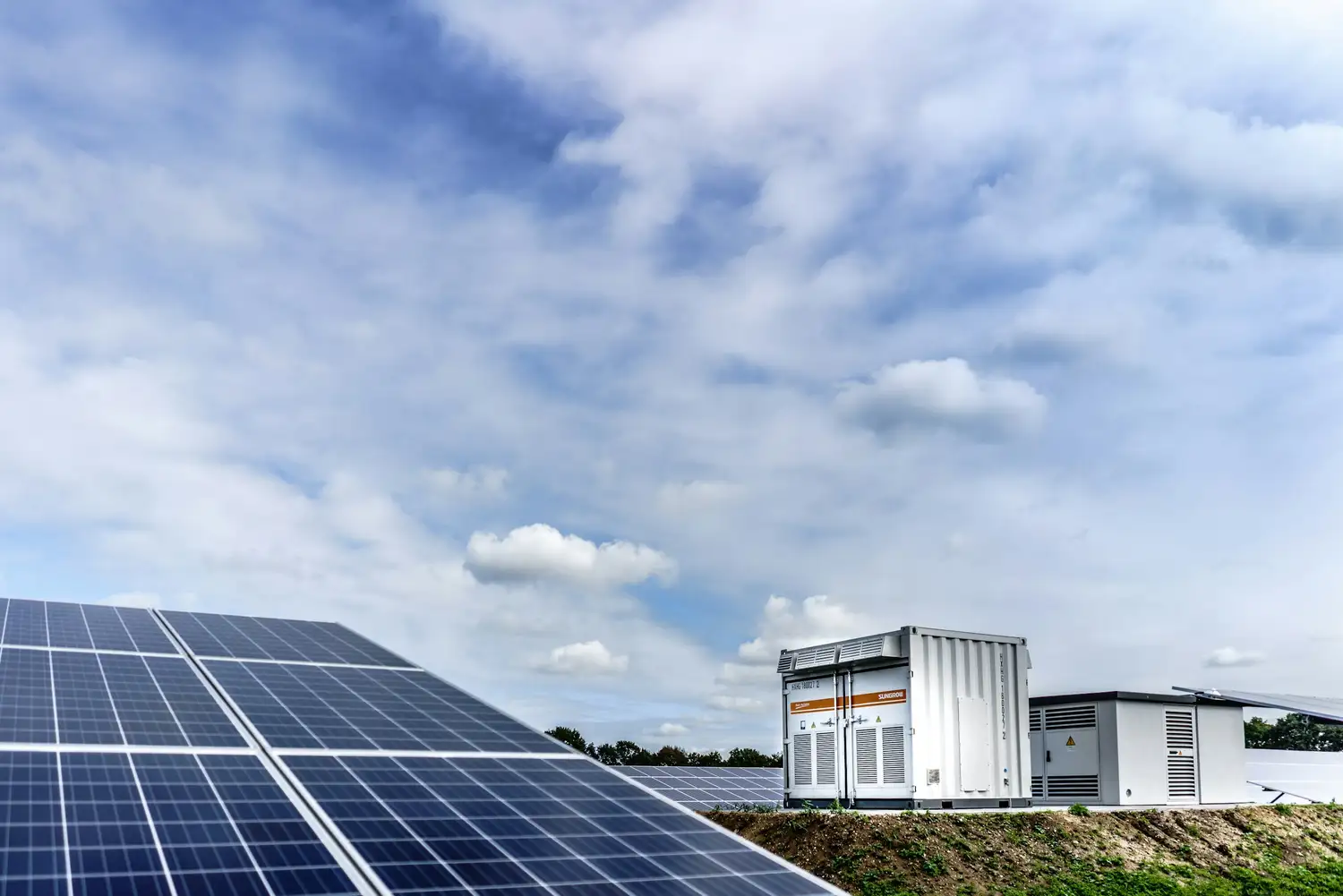
Battery storage sites need far less land than solar, often just 1.5 to 5 acres, but can pay well because the rent is usually set per megawatt (MW), not per acre. The key is being close to a substation with grid capacity.
How much land does a battery site need?
- Small sites: from around 1.5 acres.
- Typical 50MW site: around 3 to 5 acres.
- Batteries sit in shipping-container style units on a fenced, gravelled compound, with a small substation.
How the rent works
Battery rents are normally worked out per MW of the site’s size, not per acre.
- Rent per MW a year. Around £2,000 per MW is sometimes used as a benchmark, and the right figure depends on the site. One Farmers Weekly case showed an offer of £1,250 per MW, which a land agent said was below market rate.
- Rent per MWh. Worth asking for. Batteries are getting longer-lasting (more MWh for the same MW), so a per-MWh rent lets you share in that growth.
- Turnover top-up. A share of the site’s income on top of the base rent. Battery income can swing a lot from year to year, so this can be worth having.
- Index-linked. The rent should rise with inflation (CPI or RPI).
- One-off payments. Ask about payments at signing, when planning is granted and when the site is built.
Example: a 50MW battery at £2,000 per MW would pay £100,000 a year, on perhaps 4 acres. That’s an illustration, not an offer.
Typical terms
- Option first. The developer takes an option while they get planning and a grid connection. With grid queues, options can now run for many years, so make sure you are paid during it.
- Lease length. Usually 25 to 40 years. Batteries need replacing during that time, so check the lease allows for it on fair terms.
- Decommissioning. The developer must remove everything and restore the land. Push for money to be set aside for this during the lease.
- Cable routes. If a cable crosses your other land, that should be paid for too.
- Legal and agent fees. Agree up front who pays them.
Battery alongside solar
If you also have a solar farm on your land, treat the battery as a separate deal with its own rent. Don’t let it be thrown in for free.
Is my land suitable?
Battery developers look for:
- Land near a substation, ideally within a few kilometres
- Flat, dry ground outside flood zones
- Good road access for deliveries
- Distance from houses (for noise and fire safety)
What we do
We develop battery storage sites in the South West and across the UK. We’ll check your land for free and tell you straight whether it’s a good fit. Check your land for free →
Related: Battery storage development · Solar farm rent per acre · Energy trading explained
Sources
- Farmers Weekly: is this battery storage offer a good deal?
- Farmers Weekly: premiums for battery storage
- Farm Diversity: battery storage schemes, what landowners need to know
- JLL: battery storage land needs
- Thrings: battery storage for landowners
Facts last checked 25 October 2026. This is general guidance, not legal or tax advice.