

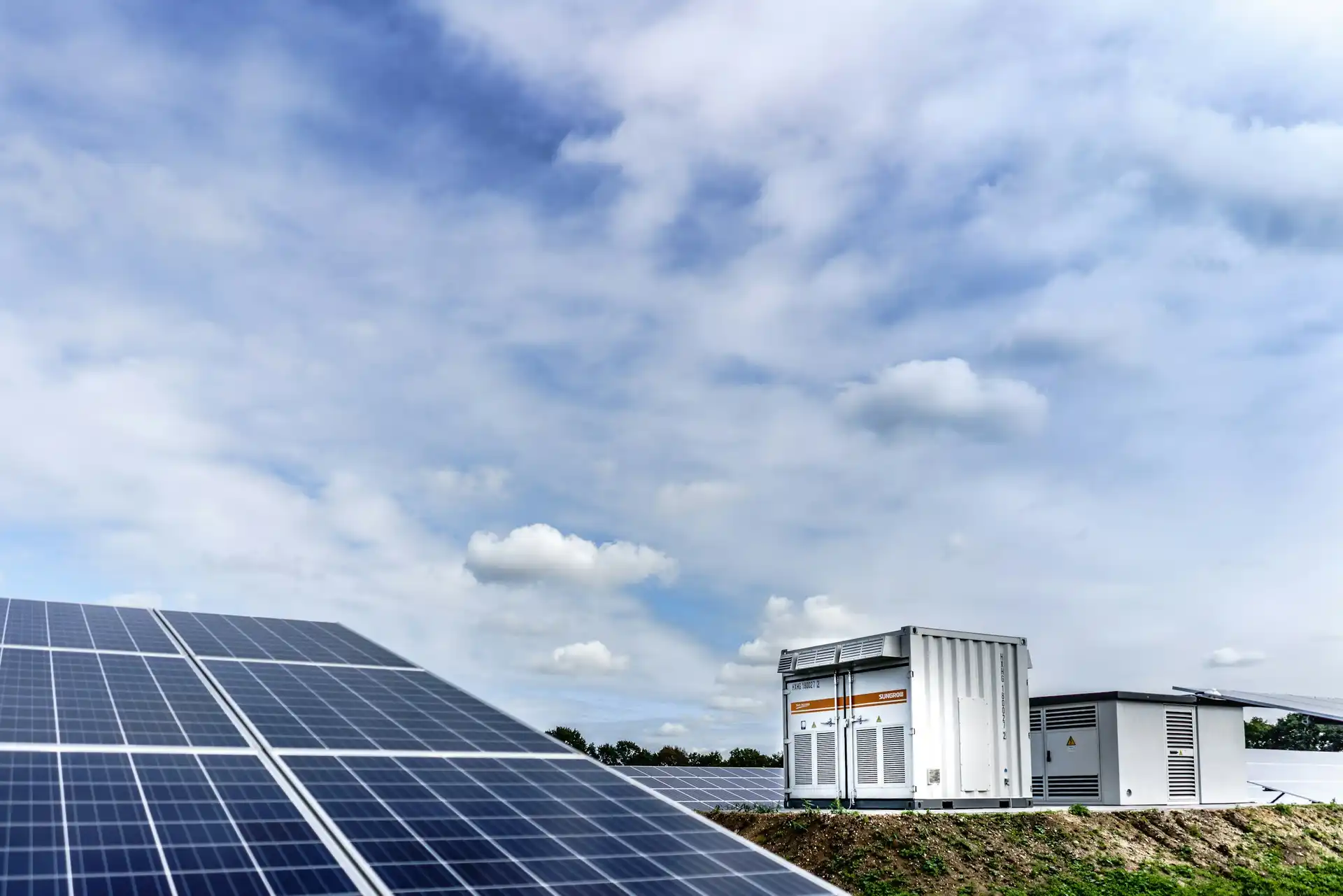
Add a battery to the consent you already have.
Most consented solar sites in the UK have no storage alongside them. Adding a battery shares the grid connection you have already won, and is often the biggest value move a site has left.
One connection, two jobs.
Grid capacity is the scarcest thing in UK renewables. If you already hold a connection, putting more earning capacity behind it is the cheapest capacity you will ever get.
The grid connection is already yours
This is the whole argument. You are adding earning capacity to a connection you have already won, rather than joining the back of the queue for a new one.
The site earns across more of the day
Solar alone exports when the sun is out, often when prices are lowest. A battery lets the site store that power and sell it when the grid actually needs it.
It is the largest value move most sites have left
Around four in five consented, unbuilt ground-mount solar sites in the UK have no battery alongside them. On a site that is otherwise stuck, this is usually the option most worth pricing.
The groundwork is done
Access, ecology, landscape and flood work already exist for the solar scheme. A battery application builds on that rather than starting from nothing.
It makes the site easier to sell
Buyers pay more for a site that can do two things with one connection, and co-located projects attract a wider set of buyers than solar alone.
Not free, and not automatic.
Co-location is worth doing on most sites, but it is a real application with real work behind it. Here is the honest list.
A planning application
A separate application, or a variation, depending on the consent you hold. In England the local planning authority decides battery applications whatever their size, so this does not drag the project into the national infrastructure regime.
A grid variation
The connection agreement has to be changed to cover import as well as export, and to reflect how the two systems share the capacity. This is the part to check first.
Noise and neighbours
Cooling fans and inverters run outside daylight hours, so a noise assessment is normally needed even where the solar scheme did not require one.
Fire safety and access
Layout, spacing, water supply and a route for the fire service, designed to National Fire Chiefs Council guidance. The local fire service is consulted.
Flood risk and ground
Batteries and switchgear need to stay dry. Lower flood risk land and firm, well-drained ground keep both consenting and construction costs down.
A revised layout
The battery compound takes a small part of the site. We redraw the array so you lose as little generation as possible.
Construction and operations are delivered with certified partner contractors. Prices are quoted ex VAT.
Connection. Size. Consent. Build or sell.
Check the connection
We read your grid offer or agreement and say whether a battery can share it, at what size, and what a variation would involve.
Size it
Power and duration sized to the connection and the site, not to a catalogue. We show what each option does to the revenue case.
Consent it
Our in-house Chartered Town Planner (MRTPI) leads the application, with noise, fire safety and flood risk covered.
Build or sell
Take it to ready-to-build and sell it on, or build it out with partners. Your call.
Co-location questions
Can I add a battery to a solar consent I already have?
Usually yes. It normally needs its own planning application or a variation to the existing one, plus a change to the grid connection agreement. The connection is the part to check first, because it decides what size of battery is worth applying for.
Will adding a battery delay my solar project?
It can, and that is a real trade-off. On a site with a grid date years away there is usually time to run the battery application in parallel at no cost to the programme. On a site about to build, it may be better to build the solar and add storage later.
Do I need a bigger grid connection?
Not always. Many co-located sites share the existing export capacity, with the battery charging from the solar or from the grid at times when the site is not exporting at full output. Whether you need more capacity depends on the agreement you hold.
Who decides the planning application?
In England, the local planning authority decides battery storage applications of any size. Battery storage sits outside the national infrastructure planning regime, so a large battery does not make your scheme nationally significant.
How much land does the battery take?
Much less than the solar. The compound is a small part of a typical site, and we redraw the array around it so the generation you lose is minimal.
Does a battery make the site easier to sell?
Generally yes. A site that can store and shift power is worth more than one that can only export, and it appeals to a wider set of buyers. See our guide on what UK solar farms have sold for.
Already hold a grid connection?
Send us the offer or the agreement. We'll tell you what size of battery it could carry and what the application would involve.