The main pros of solar farms for landowners are a steady, index-linked rent of around £1,000 to £1,200 per acre a year, a new income stream and land that can still be grazed. The main cons are a 40-year commitment, land out of crop production, possible loss of inheritance tax relief, and a project that may never be built if planning or the grid fall through. Here’s an honest look at both sides.
Solar farms pros and cons at a glance
| Pros | Cons |
|---|---|
| Steady rent, often £1,000 to £1,200 per acre a year | Ties up the land for 40 years or more |
| Rent rises with inflation (RPI or CPI) | Land out of arable production |
| Income that doesn’t depend on weather or crop prices | May lose agricultural property relief from inheritance tax |
| Sheep can usually graze under the panels | Local objections and a long planning process |
| A 10% gain in biodiversity on new schemes | Risk at the end if decommissioning money isn’t secured |
| No build or running costs for you | The grid connection may be years away, or never come |
The pros
Steady, index-linked rent
Solar rent is one of the most reliable incomes a farm can have. It is usually around £1,000 to £1,200 per acre a year, linked to RPI or CPI, so it rises over time. It doesn’t depend on yields, weather or commodity prices. Some deals add a share of the solar farm’s income on top. More on rent per acre.
Diversification
A solar lease spreads your risk. The farm no longer relies only on crops, livestock or subsidies. Many farmers use solar rent to support the rest of the business through bad years.
Grazing and biodiversity
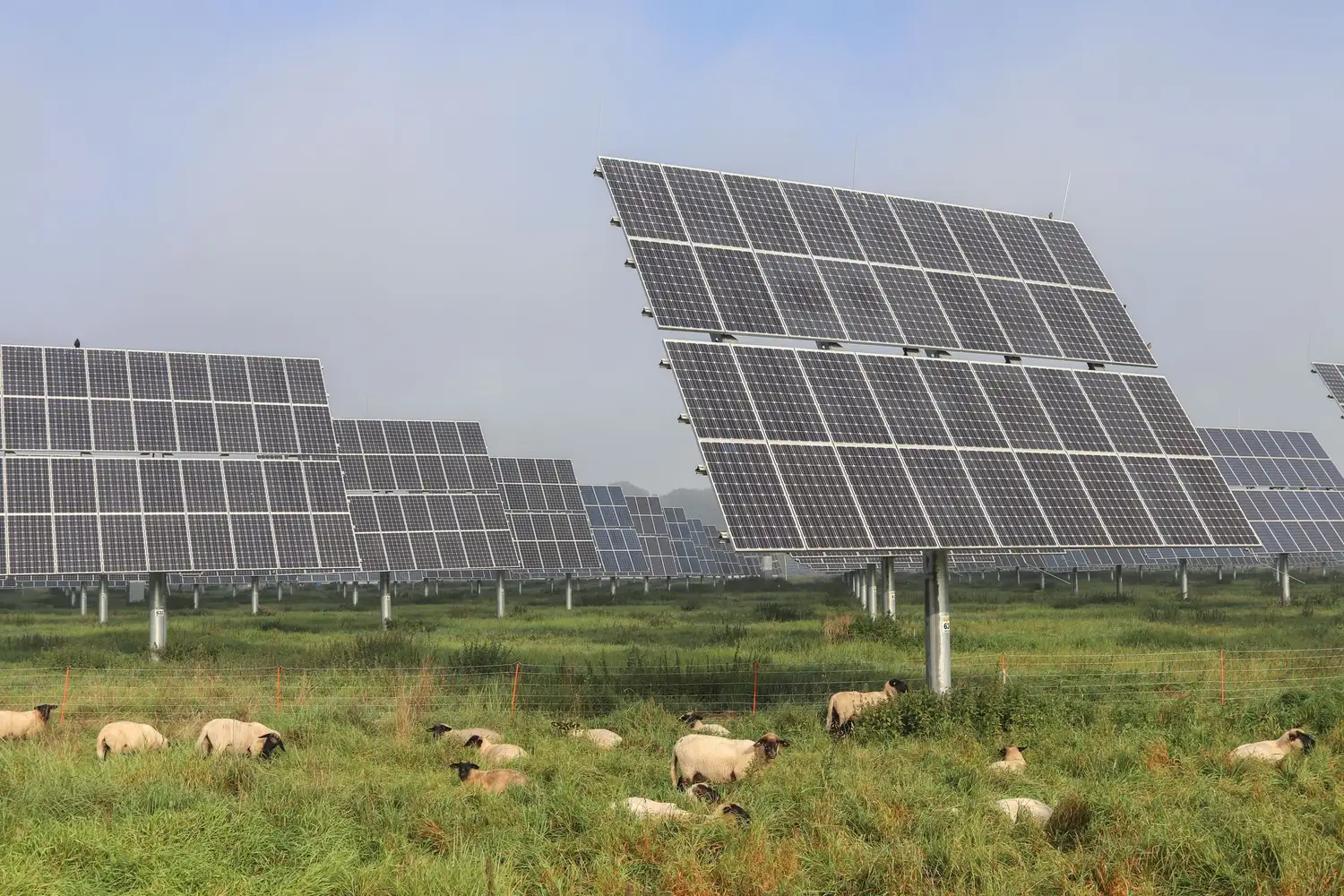
- Sheep grazing between the rows is common, so the land can stay in some farming use.
- Since February 2024, most new solar farms in England must deliver at least a 10% biodiversity net gain. That often means new hedges, wildflower margins and rested grassland.
- Soil under panels gets a long rest from cultivation. When the farm ends, the land is restored.
Low effort for you
The operator builds, runs and maintains the site. You get rent.
A small share of farmland
The government estimates ground-mounted solar covered about 0.1% of UK land in 2024. England’s Land Use Framework, published in March 2026, expects solar and onshore wind together to use about 1% of England’s land by 2050. For most farms it means one or two fields, not the whole holding.
The cons
A long commitment
Most new leases run for 40 years or more. That is likely to outlast you, and it ties your family’s hands too. You can’t easily take the land back, sell it with vacant possession or change your mind. Check the lease is outside the Landlord and Tenant Act 1954, so the tenant has no right to stay on at the end.
Land out of arable production
You lose the crop income from those fields, and any farm schemes on them may need to change. Planning policy steers solar away from the best and most versatile land (grades 1, 2 and 3a). The Land Use Framework says the same. If your land is high grade, planning will be harder.
If the land is let to a farm tenant, the tenant may lose land and income. Their agreement matters, and the NFU takes a keen interest in how tenants are treated.
Tax relief questions
Land let for solar usually loses agricultural property relief from inheritance tax, because it is no longer farmed. Since April 2026, full relief is capped at £2.5 million per person, which makes this matter more. Business property relief may help, but it isn’t certain. Take advice before you sign heads of terms.
Planning objections
Solar farms often draw local objections, mostly about views, food security and traffic during building. Planning can take a year or more and can be refused. Developers pay for the surveys and the application, but a refusal can mean years of waiting with nothing built. Which surveys are needed.
Decommissioning and bonds
At the end of the lease, the panels must be removed and the land restored. If the operator goes bust and no money has been set aside, you or your family could face the bill. Ask for a decommissioning bond or fund, built up during the lease and reviewed over time. Don’t sign without one.
Grid uncertainty during the option period
Before the lease, there’s an option period, often three to five years, while the developer seeks planning and a grid connection. The grid is the biggest unknown. Under grid reform, only projects that are ready and needed get a firm place in the queue. Some will wait years. Some won’t get a date at all. Meanwhile, your land is tied up. Grid reform for landowners.
Ask for payments during the option, and a clear end date with no open-ended extensions.
Is a solar farm right for your land?
It can be a good fit if:
- You have lower-grade land near a substation with spare capacity
- You want a steady income you don’t have to work for
- You’re comfortable committing the land for a generation
- You’ve taken tax advice and planned for succession
It may not be if your land is your best arable ground, you plan to sell soon, or the tax cost would outweigh the rent.
What we do
We check your land for free and tell you honestly whether solar makes sense, risks included. We set out terms in plain English and work with your land agent and solicitor. Check your land for free →
Related: Solar farm lease: what to check · How long does a solar farm take?
Sources
- GOV.UK: ground-mounted solar predicted land use (DESNZ)
- Full Fact: solar panels and farmland (September 2026)
- Carbon Brief: what England’s Land Use Framework means for food and nature
- GOV.UK: inheritance tax relief threshold rises to £2.5m
- Stephens Scown: closing down a solar farm
- Farmers Weekly: leasing land for solar, key points
Facts last checked 25 October 2026. Every site is different. This is general information, not legal, tax or investment advice. Always take advice from your own land agent, solicitor and accountant.