
Solar on the water, for the site beside it.
Floating solar for quarry lakes, farm reservoirs, water works and docks. We check it, consent it and manage the build, across the UK.
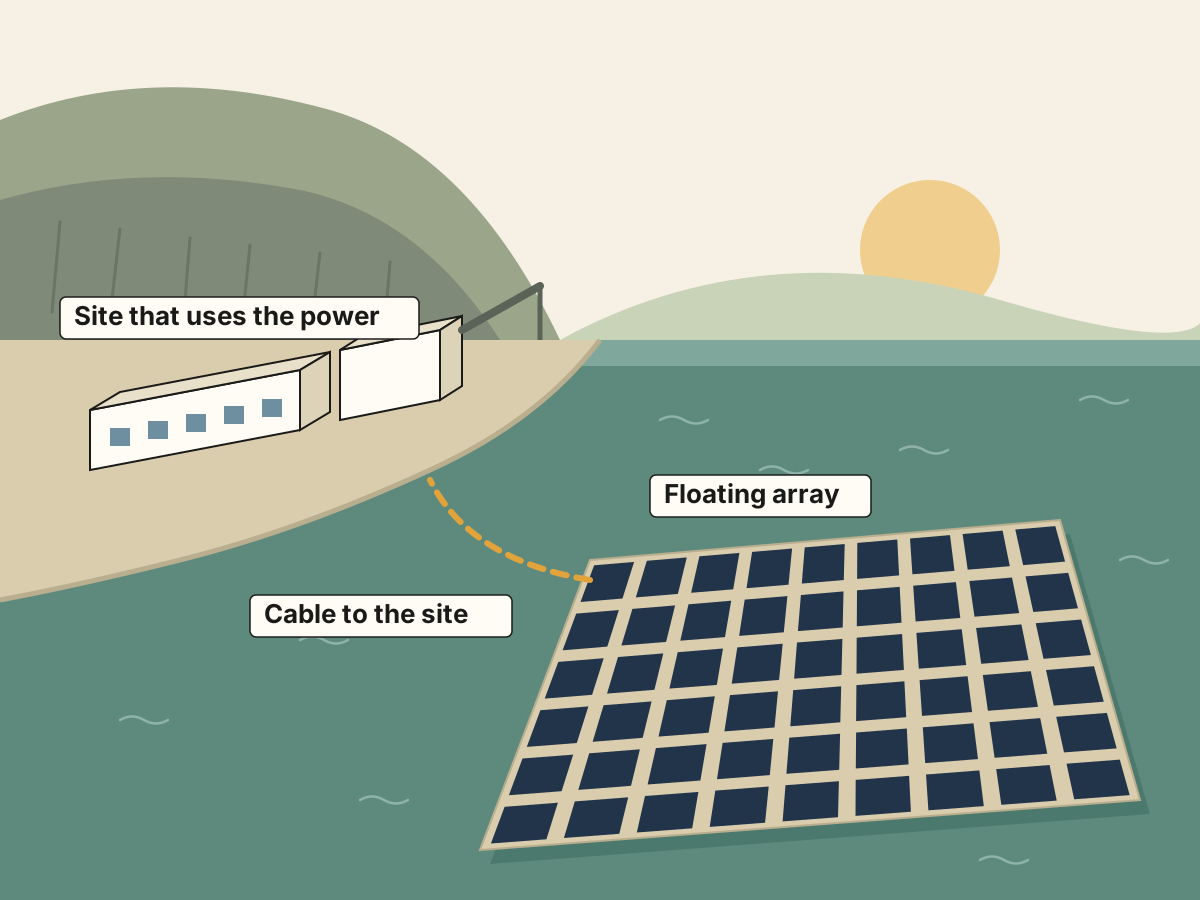
Four kinds of water that suit solar.
No spare roof, and land you would rather keep? If there is water on site and a power bill beside it, the water can do the work.
Quarry lakes
Flooded workings beside a working quarry or plant. The water has no farming value and the power is used next door.
Farm reservoirs
Irrigation reservoirs with pumps, cold stores or packhouses to run. Solar on the water keeps the fields in crop.
Water and treatment works
Reservoirs and lagoons beside pumping or treatment plant that runs day and night.
Docks and marinas
Sheltered, enclosed water beside a port, boatyard or business with a steady power bill.
Five things we look for.
Floating solar costs more than a field. It pays where the power is used on site. We will tell you plainly which side of that line your site sits on.
A user beside the water
The numbers work when the power is used on site. Exporting to the grid on its own rarely pays.
An existing grid connection
Floating solar does not unlock a site with no connection. We check the supply first.
Calm, sheltered water
Lakes, reservoirs and enclosed docks suit standard floats. Open sea needs specialist kit and costs far more.
Room to leave water open
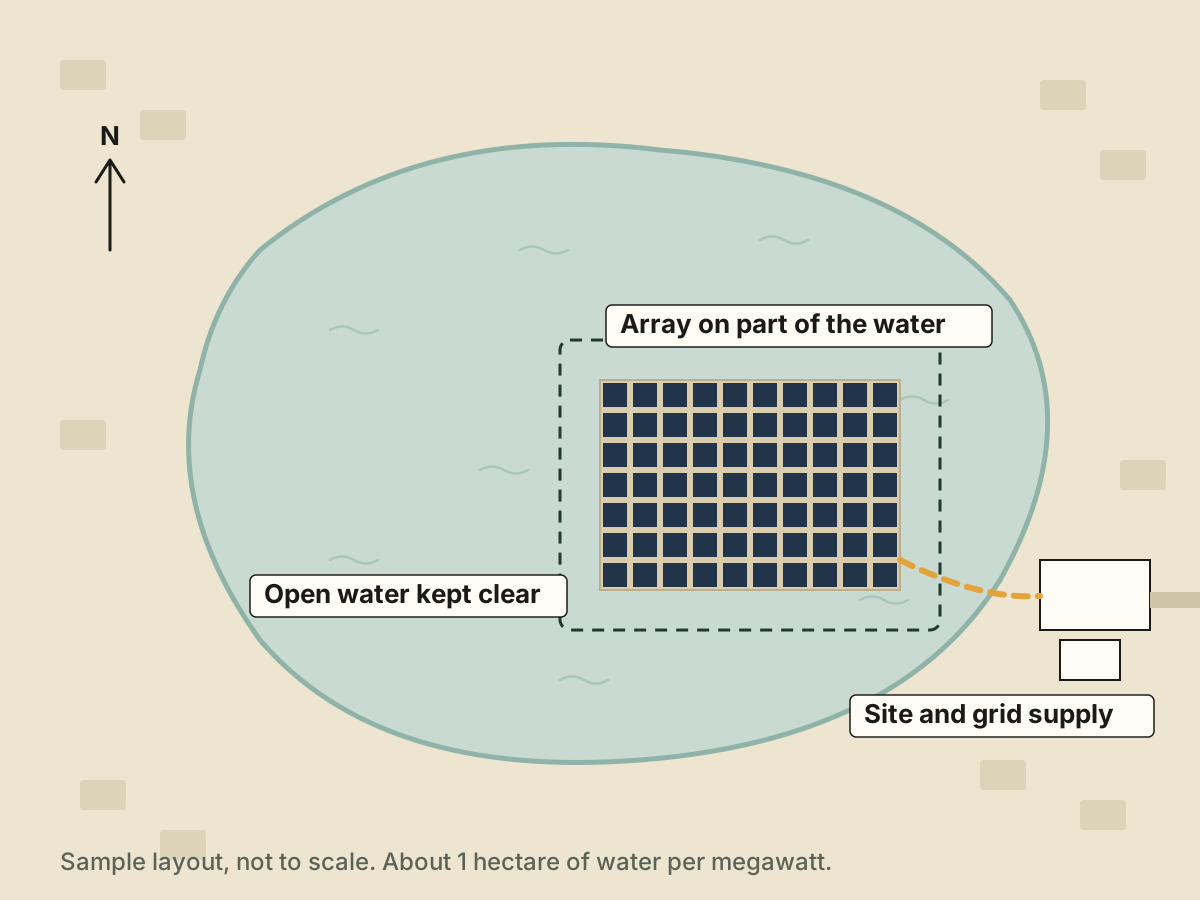
Most UK arrays cover a small share of the surface, which helps ecology, access and consent.
A steady water level
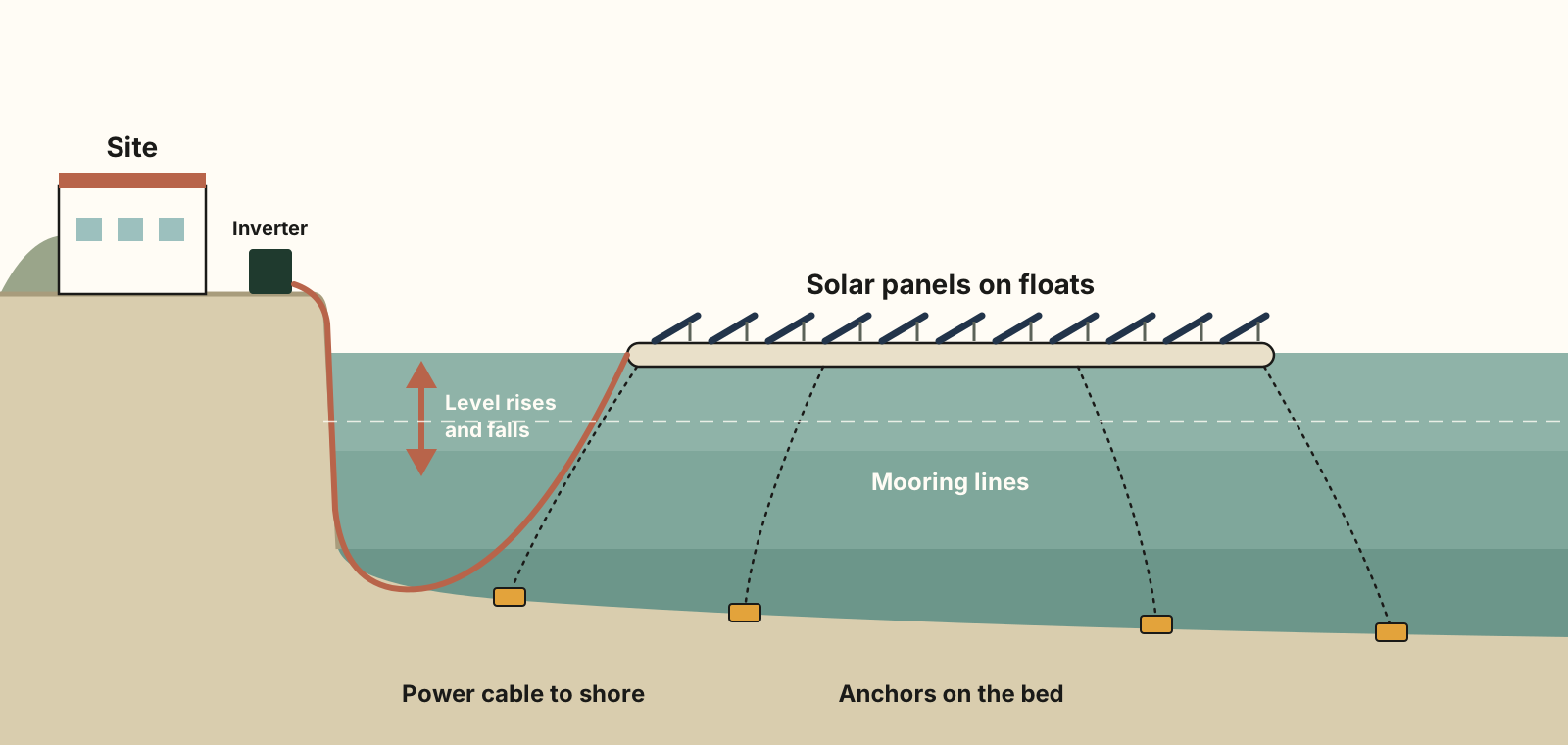
Moorings can cope with a changing level, but a big range adds cost. We allow for it from the start.
Check. Feasibility. Consent. Build.
Check
A quick, honest look at the water, the power use beside it and the grid connection. If it will not stack up, we say so.
Feasibility
Array size, yield, how much of the power you would use, budget cost and payback, in a fixed-price study.
Consent and grid
Planning, ecology, the water consents and the grid application, led by our in-house Chartered Town Planner (MRTPI).
Build
A managed build: design, float and mooring supply, installation and handover, delivered with specialist partners.
Floating solar questions
Does floating solar cost more than solar on land?
Yes. On calm inland water, studies put the extra cost at roughly 10 to 25 percent over ground-mounted solar. It can still pay where the power is used on site and there is no spare land or roof.
How much water does floating solar need?
As a rough guide, about one hectare of water for each megawatt. A 250kW array needs around a quarter of a hectare. Most sites keep most of the surface open.
Does floating solar need planning permission?
Yes. Being on water does not exempt it. Expect a planning application to the local authority, an ecology assessment, and extra consents where the water is a regulated reservoir or is tidal.
Can floating solar go on the sea or in a harbour?
Sheltered docks and harbours are possible, using floats built for salt water and waves. It costs much more than a lake and needs a marine licence, so it suits research and demonstration projects more than a simple bill saving.
What size of floating solar project do you take on?
Small and medium sites, from around 100kW up to a few megawatts, where the power feeds a user beside the water. We manage the project and the build is delivered with specialist partners.
Will floating solar harm fish, birds or water quality?
It has to be assessed site by site. Covering only part of the surface, keeping margins clear and placing anchors with care are the usual measures, and they are checked through planning.
Got water and a power bill?
Tell us where it is and what the site uses. We'll check it and give you an honest answer.