

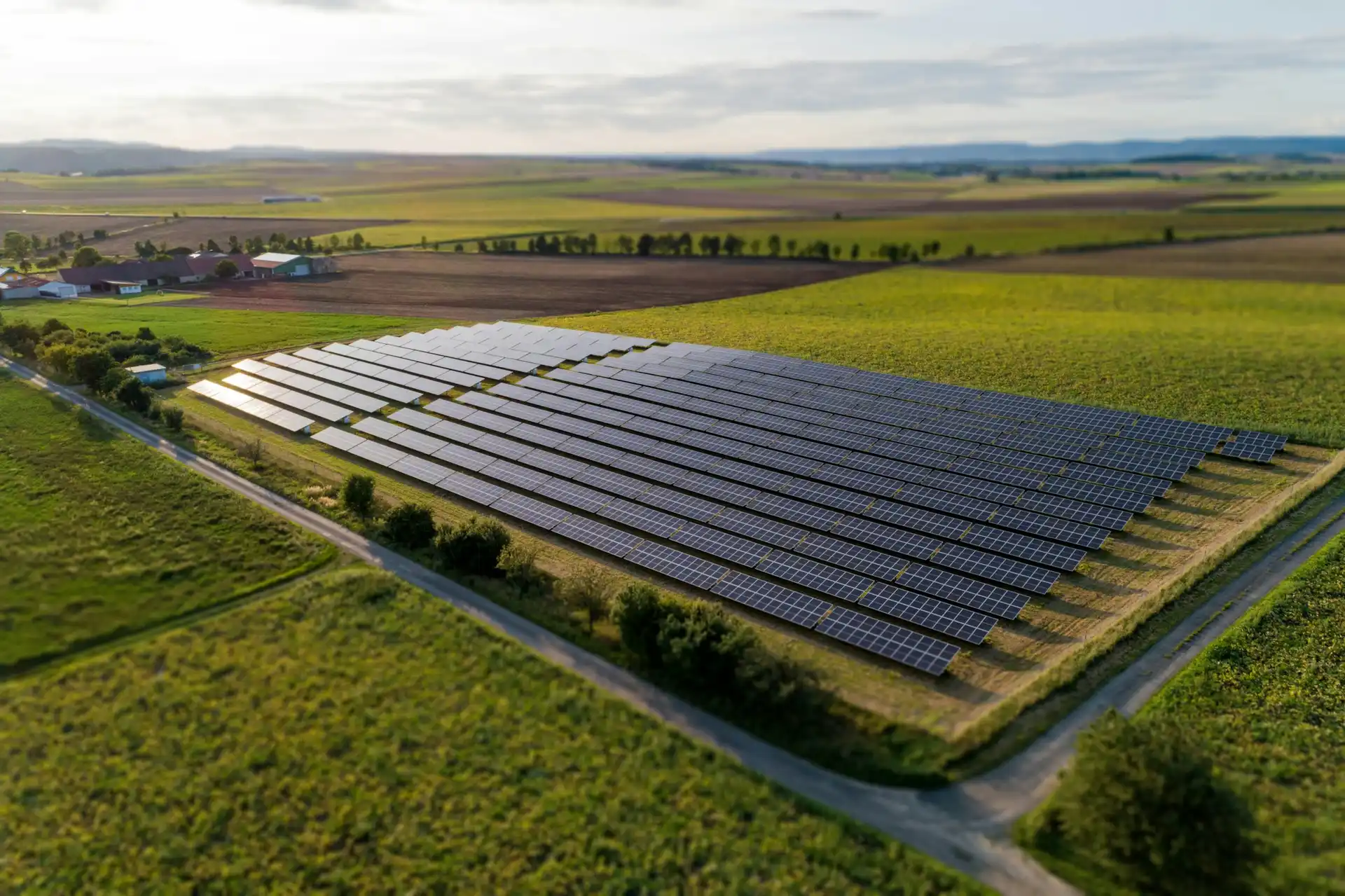
Solar farm land in Lincolnshire.
Lincolnshire has more solar in the planning system than anywhere else in Britain, and more argument about it. Here is what actually decides whether a Lincolnshire field works, in plain English.
What matters for solar in Lincolnshire.
Farmland grade is the issue here
In Devon the argument is about landscape. In Lincolnshire it is about soil. Much of the county is Grade 1 and 2 arable, and objections to large schemes almost always turn on the loss of "best and most versatile" land. A site on poorer grade land is a far easier case to make.
The biggest schemes are not decided locally
Solar farms over 100MW are decided by central government, not the council. Several Lincolnshire schemes of 350MW to 800MW have been consented that way, over local objections. Below that threshold your district council decides.
Lincolnshire County Council objects, but does not decide
The county council has formally objected to several large solar schemes. It is not the planning authority for them, so an objection is a material consideration rather than a refusal.
Two different grid networks
Unusually, Lincolnshire is split between two distribution network operators. That changes who you apply to and what the queue looks like, so it is worth establishing which one covers your land before anything else.
Major grid investment is coming
National Grid is building new transmission infrastructure across the county, including the Grimsby to Walpole project. More network capacity in Lincolnshire is the reason so many developers are here.
Who decides in Lincolnshire.
Below 100MW, a Lincolnshire solar farm is decided by the district council where the land sits. Above it, the scheme goes to central government instead, which is how most of the county's very large projects have been consented. Solar farms up to 100MW are decided by the local planning authority. Larger schemes go through the national planning process, after the threshold rose from 50MW on 31 December 2025.
Planning authorities
- Boston Borough, East Lindsey, North Kesteven, South Holland, South Kesteven and West Lindsey district councils, and City of Lincoln Council
- North Lincolnshire Council and North East Lincolnshire Council (separate unitary authorities)
- The Planning Inspectorate and the Secretary of State for schemes over 100MW
Protected landscapes
- Lincolnshire Wolds National Landscape (around 560 square kilometres, designated 1973)
- Extensive Grade 1 and Grade 2 agricultural land across the fens and the south of the county
- Large areas of flood zone 3 in the fens, which affects layout and access rather than ruling a site out
Lincoln, North Kesteven and West Lindsey share one development plan, the Central Lincolnshire Local Plan, adopted in 2023. Proposals to reorganise Lincolnshire local government into unitary councils are under consideration, which may change who decides in future.
Grid access in Lincolnshire.
Lincolnshire is split between two distribution network operators: Northern Powergrid in the north of the county and National Grid Electricity Distribution in the south. Check which covers your land before making any assumptions about capacity or queue position.
National Grid is reinforcing the transmission network across the county, including the Grimsby to Walpole project. This is a large part of why Lincolnshire attracts so many developers.
Grid connections reform has reshaped the queue. In December 2025, NGED confirmed reformed queue positions across its areas, with around 9.8GW of solar still in the queue. Projects with land secured and planning moving now get priority.
That is why we check the grid first, for free, before you sign anything. How grid reform affects landowners →
Solar already consented in Lincolnshire.
Planning permission is not the same as a solar farm. These are the Lincolnshire schemes that hold consent and have not been built. We count them from the government's own planning database, which publishes no county breakdown of it.
- Schemes consented
- 38
- holding planning permission, not yet built
- Combined capacity
- 4,837MW
- MWelec (AC), ground-mount schemes of 1MW and above
- Consented 3+ years ago
- 8
- 325MW at or past the point a permission has to be begun
- Longest waiting
- 2013
- the year of the oldest unbuilt consent still listed
20 of the 38 have no battery recorded against them, and they are held by 31 different operators. A consent that sits still usually means a developer without the grid team, the funding or the reason to push it, which is worth knowing before you sign with one. Our national count →
Source: DESNZ Renewable Energy Planning Database, July 2026 extract, ground-mount solar recorded as awaiting construction. Our own analysis.
A steady rent, at no cost to you.
Every site is different. We give you a clear figure once we know your land. How solar rents work →
Rent
Solar rents are often around £1,000 per acre a year, linked to inflation, for the life of the lease.
Lease length
Most new solar leases run for around 30 to 40 years. At the end, the land is restored.
No cost to you
The project pays for surveys, grid and planning.
Keep farming
Sheep can graze between the panels, and the land can be managed for wildlife.
Solar in Lincolnshire: questions
Does good farmland rule out a solar farm in Lincolnshire?
Not automatically, but it is the main obstacle in this county. Planning policy expects poorer quality land to be used in preference to the best and most versatile grades, and objections to Lincolnshire schemes almost always focus on this. A site on lower grade land, or one that can show the better land is a small part of the whole, is a much stronger case.
Who decides a solar farm application in Lincolnshire?
Up to 100MW, the district council where the land is: West Lindsey, East Lindsey, North Kesteven, South Kesteven, South Holland, Boston Borough or the City of Lincoln, or one of the two northern unitary councils. Above 100MW it is decided nationally by the Secretary of State.
Which grid network covers my land?
It depends where in the county you are. The north is Northern Powergrid and the south is National Grid Electricity Distribution. It matters, because the application route, the queue and the available capacity are all different. We check this as part of a free land check.
Lincolnshire already has a lot of solar. Is there room for more?
There is a great deal in the planning system, which makes the grid position and the farmland grade more important than they would be elsewhere, not less. A site with a workable connection and a sensible land grade is still attractive. One with neither is unlikely to move.
How much do solar farms pay per acre in Lincolnshire?
Solar rents are often around £1,000 per acre a year, linked to inflation, but the figure depends on the grid connection, the site and the market. Good arable land commands a higher farming return, so the comparison matters more here than in most counties. We give you a clear figure once we know your land.
Other counties
- Land for solar in Devon →
- Land for solar in Cornwall →
- Land for solar in Somerset →
- Land for solar in Dorset →
- Land for solar in Wiltshire →
- Land for solar in Gloucestershire →
- Landowner guide →
Sources: Lincolnshire Wolds National Landscape · Natural England: National Landscapes renaming · National Grid: Grimsby to Walpole · GOV.UK: Lincolnshire local government reorganisation · NGED: queue formation · Solar Power Portal: 100MW threshold. Checked 2 November 2026.
Got land in Lincolnshire? Check it for free.
Tell us where it is. We'll check the grid and planning picture and give you an honest answer.